
Article
78 performance review phrases to share effective feedback
Performance management
18 min read
Written by

The employee experience platform
Many people join a company because they believe in its values, vision, and long-term potential. But without a sustainable performance culture, even the most motivated teams can become overextended, disengaged, and at risk of burnout.
Long-term business success isn’t defined by how hard employees can work in a single quarter. It’s shaped by the systems, leadership behaviors, and cultural norms that support people over time. Without sustainable ways of working, even high-performing organizations can struggle to maintain momentum.
To help organizations understand the relationship between employee engagement and confidence in business performance, Culture Amp introduced the Performance Culture Quadrant (PCQ). It uses those two criteria to place organizations into one of four cultural states:
Peak
Engaged Skepticism
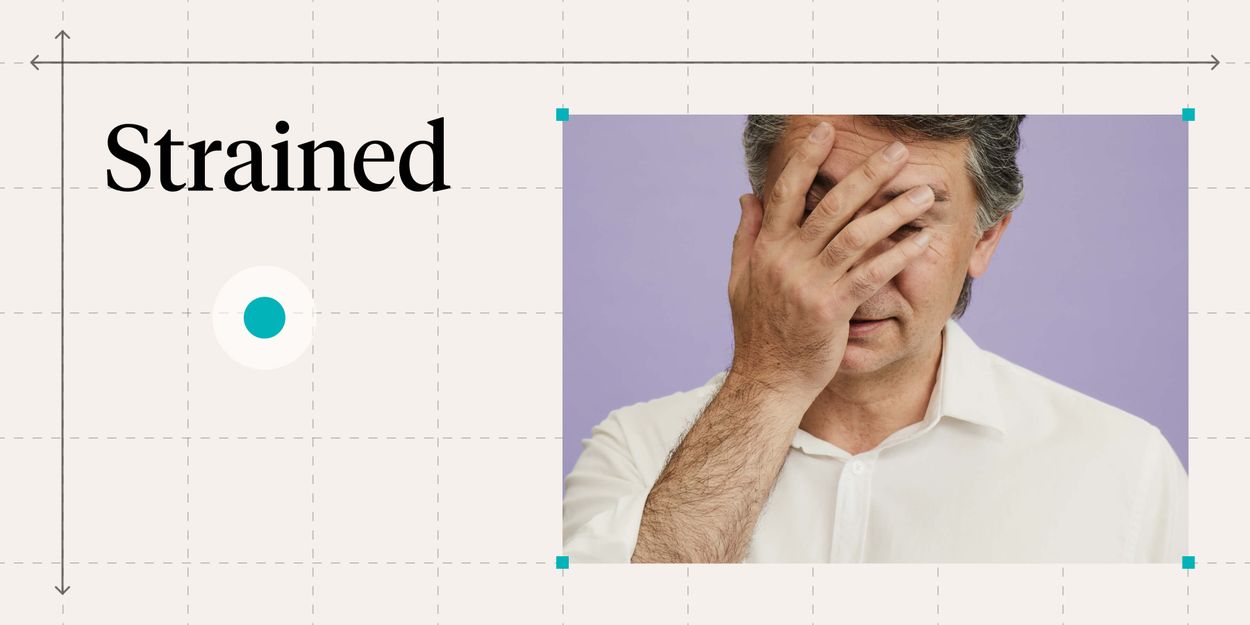
Strained
Disconnected
In this article, we focus on Strained cultures – organizations where there is strong alignment on where the company is headed and its aptitude to achieve success, but employees are struggling. We’ll shed light on the underlying signals pointing toward Strained cultures and explore practical steps your organization can take to move toward a more sustainable state of Peak Performance.
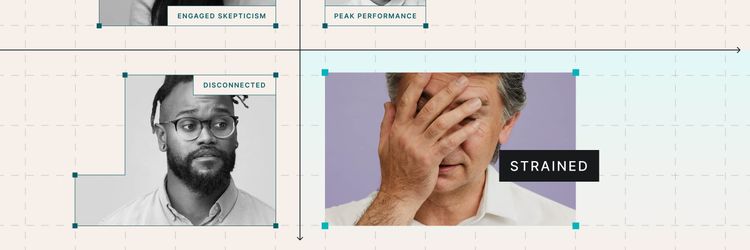
A Strained performance culture is characterized by low engagement but high confidence in business performance and future success. Employees believe the company will meet the high goals it sets, yet many lack the energy and motivation needed to sustain high performance over time. In the short term, businesses may continue to hit targets and achieve objectives, making the issue easy to overlook. The real risk lies in the lack of longer-term sustainability and goal execution.
The pressure to perform in a Strained work environment can push employees beyond healthy limits. Burnout risk is high, and without intervention, engagement can decline to levels a company may not be able to recover from. To sustain performance over time, organizations need to take action early and help employees find a healthier balance between delivering results and maintaining their wellbeing.
While business performance in Strained organizations may appear strong, there are often underlying warning signs that shouldn't be ignored. Behind those positive results, employees may feel emotionally exhausted by the pace of work, or burnt out from the pressure required to sustain results over time.
How can you tell if your organization falls into a Strained culture state? Some common signs include:
Does reliability feel safer than creativity as a way to earn recognition?
Do people consistently deliver results while becoming less willing to challenge assumptions, experiment, or take risks?
Do employees seem energized by results but increasingly disconnected from the company's culture and values?
Are your top performers struggling to sustain the pace they've been working at?
Are absenteeism rates consistently high or increasing?
Have people stopped going beyond their job descriptions to help their colleagues?
Have conversations about career growth and development been replaced by conversations about workload and capacity?
Without intervention, these patterns can make it difficult to sustain high performance over time. To help employees see work as more meaningful and sustainable – rather than purely transactional – organizations need to invest in both performance and people.
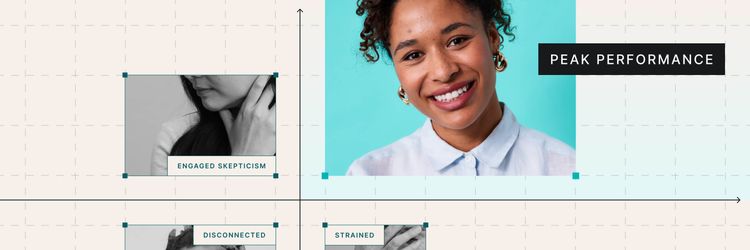
Hitting Peak Performance pays off. Culture Amp research shows that Peak organizations have 21% more high performers, an 88% retention rate, and a 47-point stock price advantage compared to organizations in any other cultural state. But reaching Peak Performance requires more than strong business results – it takes strategic investments in the employee experience.
For companies with a Strained performance culture, the path to Peak starts with focusing on the human side of performance. Our research identified three areas that help organizations move from strained success to sustainable high performance: leaders demonstrating that people are important to company success, commitment to social responsibility, and inviting employees to participate in culture change. Organizations that moved from Strained to Peak Performance within one year saw survey results shoot up by 8-12% points in these key areas.
Let’s explore each of these in more depth.
Creating a sustainable high-performance culture starts at the top. Employees need to feel they are more than just a number, and leaders play a critical role in reinforcing that feeling every day. When leaders consistently demonstrate that employees are valued contributors whose work and wellbeing matter, organizations are better positioned to sustain high performance over time. At companies that shifted from Strained to Peak Performance, employee perception that leaders see them as important improved by 9% points in just one year.
Leaders can demonstrate that they value their employees through everyday actions, including:
Taking time to recognize and celebrate achievements
Investing in employee growth and development
Connecting work to a larger purpose and positive impact
Encouraging teammates to take time off
Messaging only during standard work hours
Alternating workloads to give people time to recover after a big project
When employees feel respected and valued by their organization – and especially their leaders – they’re more likely to stay engaged, energized, and motivated to perform at a high level over the long term.
Employees are more likely to stay engaged when they feel they have a voice in how their workplace evolves. Organizations can foster that sense of ownership by regularly asking for feedback and using what they learn to involve employees in meaningful culture change efforts.
One of the most effective ways to do this is through regular employee surveys that cover topics such as engagement, manager effectiveness, diversity and inclusion, and key moments across the employee lifecycle, including onboarding, stay, and exit. These surveys provide organizations with both qualitative and quantitative insights to uncover underlying challenges and identify opportunities to improve the employee experience.
But collecting feedback is only the first step. Employees want to see that their input leads to visible change. When organizations share survey results transparently and take action on feedback, they build employee trust, strengthen engagement, and prove that employees matter. Over time, this creates a workplace where people feel supported and motivated to contribute to the organization’s success. Employees at companies that moved from Strained to Peak Performance felt 10% points more included in culture change initiatives across one year.
In Strained cultures, employees can become so focused on delivering results that they lose sight of why their work matters. Over time, work can start to feel transactional rather than meaningful.
Organizations that successfully moved from Strained to Peak Performance improved employees' perceptions that the company was making a positive difference. Leaders can strengthen this connection by:
Sharing stories that highlight the impact of employees' work
Connecting business goals to a broader purpose
Recognizing contributions that support customers, communities, and colleagues
Demonstrating company values through action
When employees see how their work contributes to something larger, they're more likely to stay engaged, motivated, and energized over the long term.
Organizations can move from Strained to Peak Performance faster than many leaders expect. In fact, roughly one-quarter of companies in non-Peak states reached Peak Performance within a year.
While these changes require intention and investment, the impact can be significant – and measurable. Companies that moved from Strained to Peak Performance saw the largest improvements in:
Sharing and taking action on survey results – 10–12 percentage point increase
Effectively directing resources – 10 percentage point increase
Leaders demonstrating people are important – 9 percentage point increase
Company making a positive difference – 8 percentage point increase
These findings reinforce an important idea: Sustainable high performance is built by investing in people. When organizations create an environment where employees feel heard and connected to meaningful work, both engagement and performance confidence follow.
You’re anything but stuck in a Strained performance culture. With intentional listening and meaningful action, organizations can move from Strained to Peak Performance within a year.
By consistently listening to employees, taking action on their feedback, and prioritizing sustainable performance, your organization can support both business growth and employee wellbeing.
Are your teams stretched thin? Diagnose your performance culture type with Culture Amp’s Performance Culture Quadrant and get your own tailored roadmap to Peak Performance. Our team of People Scientists will help your organization identify the right actions to strengthen engagement and build a healthier culture for the future.

Unlock the 47% advantage: A guide for modern leaders.
Article
Article
Article